What Is a Good Credit Card Processing Rate? Your Effective Rate, Explained
Your processor quoted you 2.6%. So why does your statement say you paid more? Here's how to find your real effective rate in two minutes, what a good credit card processing rate looks like for your type of business, and the red flags that mean you're overpaying.
By the MTech Distributors team
"What rate am I on?" Ask most business owners and you'll get one of two answers. A shrug. Or a number the sales rep said three years ago, like 2.6%.
Here's the thing: that number is almost never what you actually pay. The rate that matters is your effective rate. And once you know it, you'll know in about two minutes whether you have a good credit card processing rate or you're getting padded.
What is an effective rate?
Your effective rate is every dollar you paid in processing fees last month, divided by every dollar you ran on cards. That's it. It rolls up the percentage, the per-transaction cents, the monthly fees, the PCI fee, the statement fee, all of it, into one honest number.
How do I figure out my effective rate?
Grab your last processing statement and find two numbers:
Total fees (sometimes called "total charges" or "fees charged").
Total card volume (sometimes "total sales" or "amount submitted").
Divide fees by volume. If you paid $1,250 in fees on $40,000 in card sales, your effective rate is 3.1%.
Can't find those numbers? That's not your fault. A lot of statements are built to be confusing. Which honestly tells you something too.
What is a good credit card processing rate?
For most local businesses, card processing costs land somewhere between about 1.5% and 3.5% of sales. Where you fall in that range depends on a few things you can't fully control:
The cards your customers carry. Plain no-rewards cards cost the least. Corporate and premium rewards cards can push the cost past 3%.
How you take the card. Tapped or dipped in person is cheapest. Keyed in, over the phone or online costs more because the card can't be verified with a chip.
Your ticket size. Small tickets get hit harder by the fixed cents on every transaction, especially on debit.
Your volume. Higher volume usually qualifies for better pricing.
So a good rate for a busy sit-down restaurant with $80 checks looks different from a good rate for a coffee shop selling $4 lattes. If your effective rate is creeping toward 4% on mostly in-person sales, something's off.
Flat rate vs. interchange plus: which one is cheaper?
There are a few ways processors price you:
Flat rate, like 2.6% + 15¢ on every in-person swipe. Simple and predictable, but you pay the same on a cheap debit card as on a premium rewards card. That difference goes to the processor.
Interchange plus, where you pay the actual card-brand cost plus a fixed markup. More moving parts on the statement, but usually cheaper for businesses doing real volume, because you can see exactly what the markup is.
Tiered, where transactions get sorted into "qualified," "mid-qualified" and "non-qualified" buckets. This is the one to watch out for. The processor decides which bucket each card lands in, and a lot of them end up in the expensive ones.
There's no such thing as a real flat rate on the processor's side. Every card costs something different. A flat rate is just an average with padding built in.
Red flags that you're overpaying
You don't know what pricing model you're on.
Your statement has "non-qualified" or "mid-qualified" charges.
You see a PCI non-compliance fee every month.
Your rate went up and nobody called you.
You're paying for "support" but nobody picks up the phone.
How do I get my rate down?
You can shop around and shave a few basis points. That's worth doing. But you still can't control which cards walk through your door.
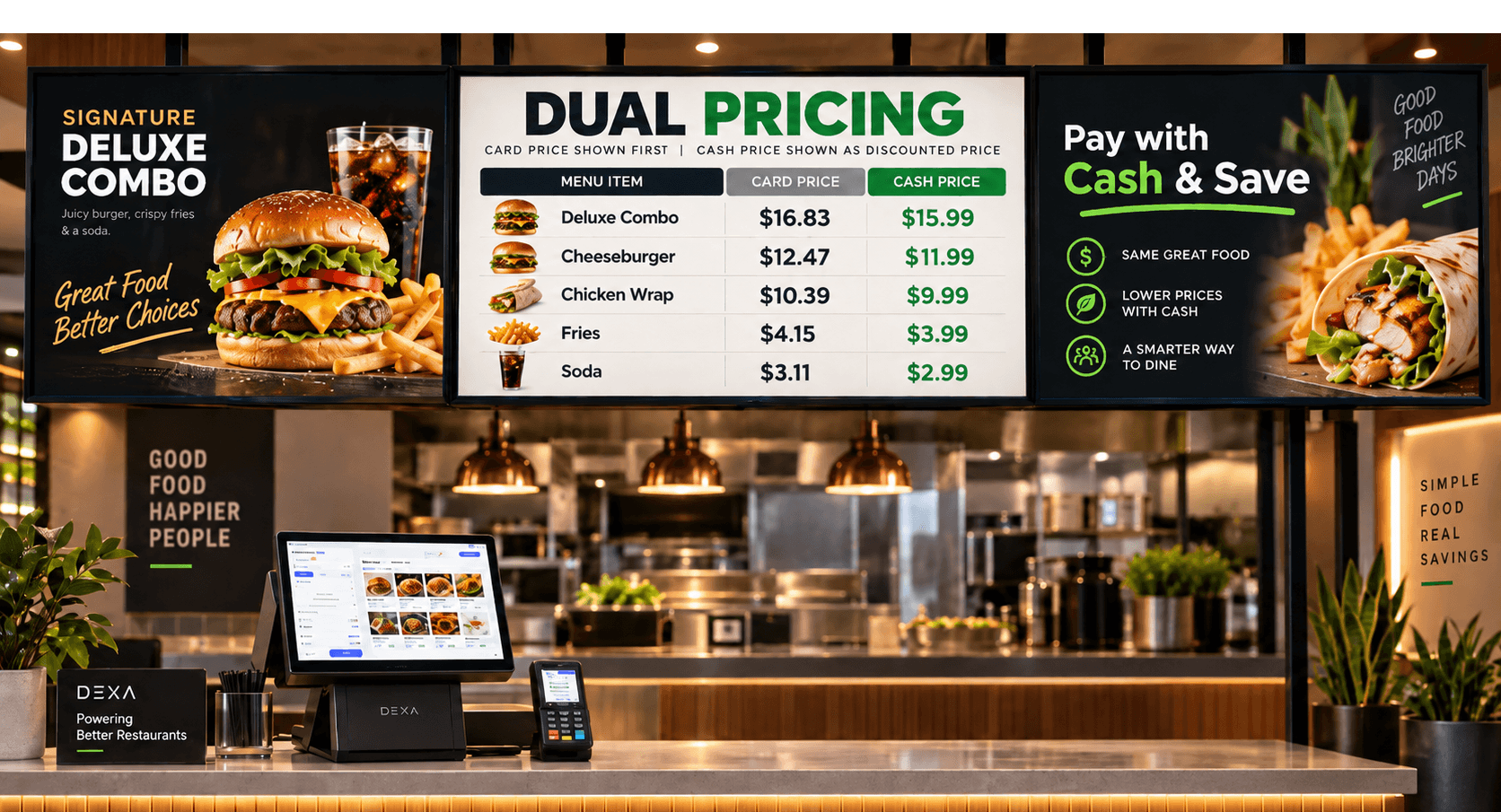
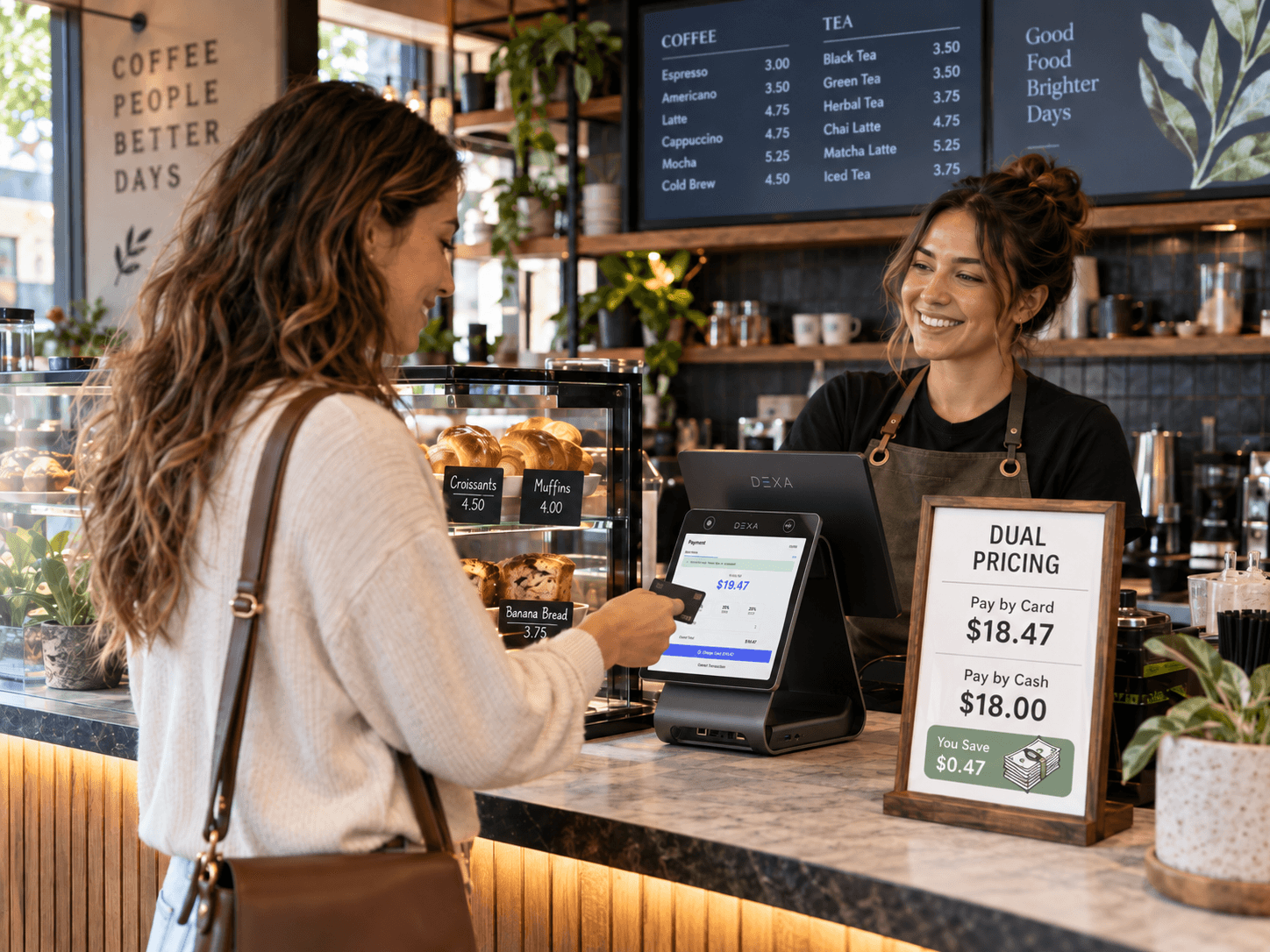
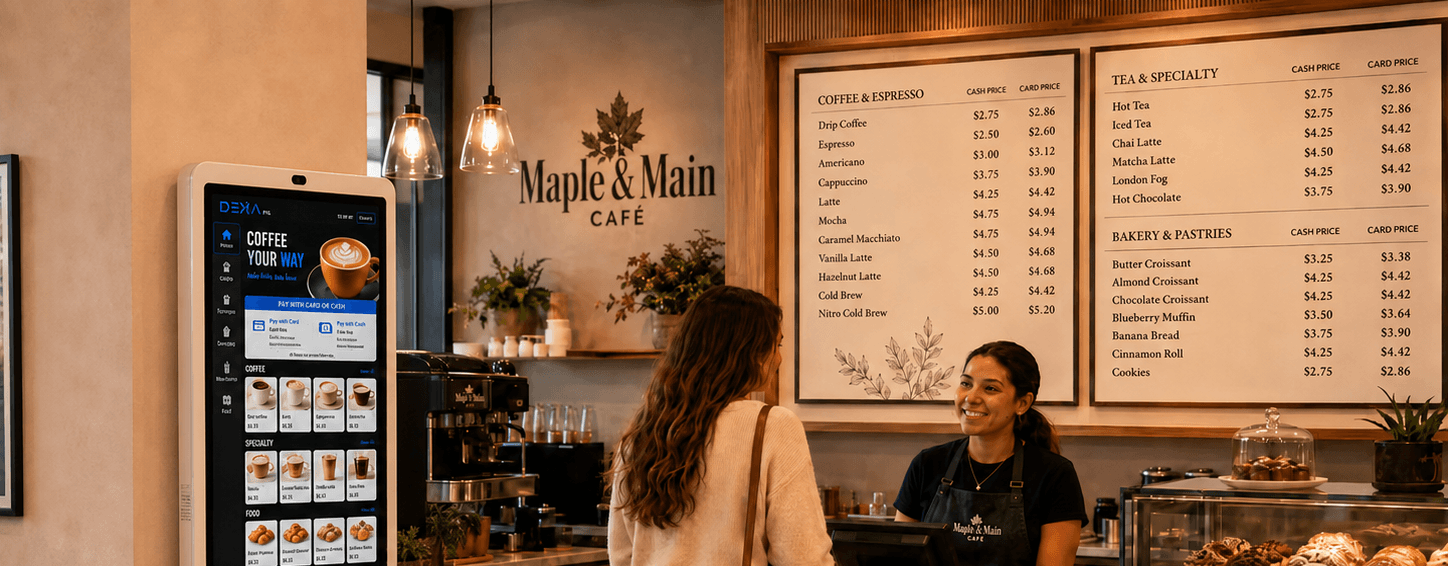
The bigger move is dual pricing: post a cash price and a card price, let the customer choose, and the card price covers the processing cost. Merchants on a properly set up dual pricing program are essentially paying zero in processing fees. That's not a better rate. That's no rate.
Quick answers
What is a good credit card processing rate? For most local businesses, an effective rate between about 1.5% and 3.5%, depending on card mix, ticket size and how cards are taken.
What is a good effective rate for credit card processing? It depends on your business, but if mostly in-person sales are costing you close to 4%, you're likely overpaying.
How do I calculate my effective rate? Total processing fees divided by total card sales for the month.
Is interchange plus better than flat rate? For businesses with steady volume, interchange plus is usually cheaper because the markup is visible and fixed.
Find out what you're really paying
Don't want to dig through the statement yourself? Fair. Send it to us and we'll pull your effective rate for you.
Send us one recent statement. We'll show you your real rate, where the padding is, and exactly what you'd keep with dual pricing. No contract, no cancellation fee, and a real person on the phone.
Call 888-411-7583 or get your free savings quote.
MTech Distributors has helped 5,000+ businesses across all 50 states since 2017.