Is Dual Pricing Legal? What NY, NJ & CT Owners Need to Know
Is dual pricing legal, or is it going to get you in trouble? Short answer: it's legal when it's set up right. Here's what owners in New York, New Jersey and Connecticut actually need to do, and the mistakes that get businesses fined.
By the MTech Distributors team
Every week, a business owner asks us the same thing: is dual pricing legal, or is this going to come back and bite me? Fair question. You've heard the horror stories. A neighbor got a letter from the state. A customer posted a receipt online and called it a scam.
Here's the short answer: dual pricing is legal when it's done right. The trouble almost always comes from doing it wrong, like adding a surprise fee at the register instead of showing prices upfront. So let's break down what "done right" actually means, state by state, for the owners we work with every day in New York, New Jersey and Connecticut.
What is dual pricing, really?
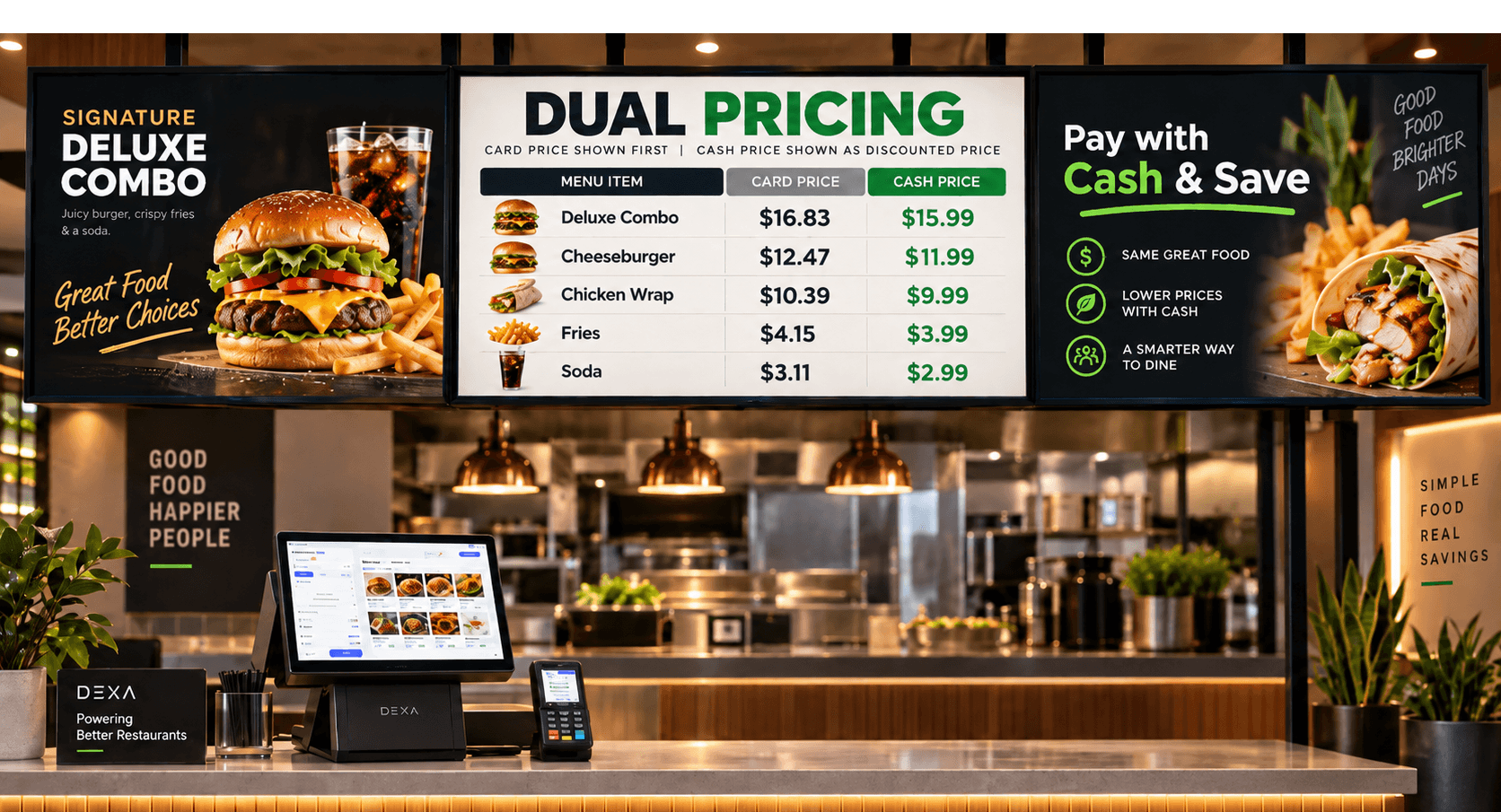
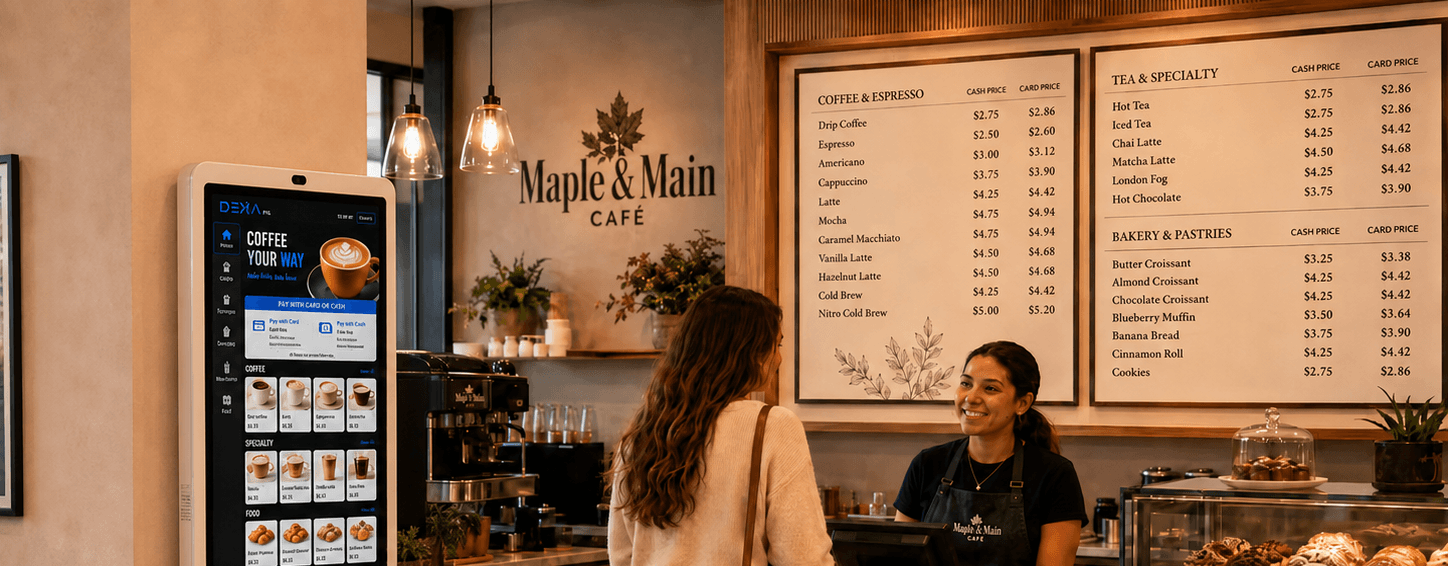
Dual pricing means you show two prices: a card price and a cash price. The customer sees both before they pay and picks. Pay cash, get the lower price. Pay by card, pay the card price.
That's it. No hidden fee. No line item that shows up after the sale. The customer knows exactly what they're paying before they reach for their wallet. That transparency is the whole reason it holds up.
Is dual pricing the same as a surcharge?
No, and this is where most of the confusion comes from.
A surcharge is a fee added on top at checkout because someone used a credit card. Surcharges come with strict card-network rules, can't legally be applied to debit cards, and are banned or restricted in some states.
Dual pricing shows both prices upfront. Nothing gets tacked on at the end. The card price is just the price.
If your current setup adds a "3% card fee" line to the receipt, that's a surcharge, not dual pricing. Different rules, different risks.
Is dual pricing legal in New York?
Yes. New York actually spells it out. After a 2024 state law, the New York Department of State published guidance listing three ways to handle cash and card pricing that it considers compliant:
Clearly show both the card price and the cash price.
List the higher card price and offer a discount for cash.
Charge everyone the same price.
What New York doesn't want: a sign at the register about a "credit card fee," a "convenience fee" line on the receipt, or price tags that hide the real card price. If you surcharge in New York, the total price including the surcharge has to be posted right on the item. Penalties can run up to $500 per violation, so the details matter.
Is dual pricing legal in Connecticut?
Connecticut is the strictest of the three. Credit card surcharges are banned there. What Connecticut does allow is a cash discount, as long as the card price is your listed price and customers are told about the discount before they pay. That notice has to be posted on the premises, shown before checkout online, or said out loud on phone orders.
Some legal readings of the 2022 law say showing two separate prices side by side isn't the right format in Connecticut. So for our Connecticut merchants, we set it up the safe way: card price on the menu and shelf tags, cash discount clearly posted at the door and register, and the discount shown on the receipt.
Is dual pricing legal in New Jersey?
Yes. New Jersey allows credit card surcharges as long as they don't go over what the card actually costs you, and they must be disclosed before the sale. That means signs at the entrance and point of sale, on menus (including QR menus) for restaurants, and on the checkout page online. Surcharging debit cards is not allowed.
Keep an eye on Trenton, though. Bills introduced in 2026 would ban surcharges on debit and gift cards, and one would ban credit card surcharging entirely. Cash discount programs are the steadier ground if those pass.
Is dual pricing legal in all 50 states?
Showing a cash price and a card price upfront is the most widely accepted way to stop eating card fees, and it's the approach we use across all 50 states. But every state words its rules a little differently, and a few, like Connecticut, Massachusetts, Maine and California, are much tougher on surcharges. Rules also keep changing, so check your state's current statute or talk to someone who sets these up for a living before you flip the switch.
The 5 mistakes that get businesses in trouble
Surprise fees at checkout. If the customer finds out at the register, you've got a problem.
No signage. Post it at the door, at the register, on the menu and online.
Calling it a "fee" on the receipt. In New York especially, that's exactly what regulators flag.
Surcharging debit cards. Not allowed with a surcharge. Ever.
Copying a setup from another state. What works in Jersey can get you fined in Connecticut.
Quick answers
Is dual pricing legal? Yes, when both prices are shown upfront and properly disclosed. The problems come from surprise fees, not from dual pricing itself.
Is dual pricing legal in New York? Yes. New York's Department of State lists showing both a cash and card price as compliant.
Is dual pricing legal in CT? Connecticut bans credit card surcharges but allows a cash discount off the listed card price, with notice posted before the sale.
Is dual pricing legal on debit cards? Dual pricing treats every card the same: the card price is the card price. What's not allowed is adding a surcharge to a debit card.
Is dual pricing the same as a cash discount? Close cousins. Both reward cash payers instead of penalizing card payers. The difference is mostly how the prices are displayed.
This post is general information, not legal advice. State rules change, and we check the current rules in your state before we set you up.
Find out what you're really paying
Not sure if your current setup is compliant? We'll look at how your prices, signs and receipts are set up and tell you straight.
Send us one recent statement. We'll show you your real rate, where the padding is, and exactly what you'd keep with dual pricing. No contract, no cancellation fee, and a real person on the phone.
Call 888-411-7583 or get your free savings quote.
MTech Distributors has helped 5,000+ businesses across all 50 states since 2017.