Dual Pricing vs. Surcharging vs. Cash Discount: What's the Difference?
Dual pricing, surcharging and cash discounts all promise to cut your card fees. They are not the same thing. Here's what each one looks like to your customer, where the legal landmines are, and which one we'd actually set up for your business.
By the MTech Distributors team
Your processor calls it a "cash discount program." The pizza place down the block calls it "dual pricing." Your cousin's shop has a little sign that says "3% fee for credit cards." Are they all the same thing?
Nope. And mixing them up is how good owners end up with angry customers, a letter from the state, or a fine from Visa. So let's line up dual pricing vs. surcharging vs. cash discount, side by side, in plain English.
What is surcharging?
A surcharge is a fee added on top of the price at checkout because the customer paid with a credit card. The menu says $10. The receipt says $10 plus a $0.30 card fee.
It works, but it comes with a lot of rules:
You have to give Visa, Mastercard and your processor 30 days' notice before you start.
The surcharge can't be more than what the card actually costs you.
You can never surcharge a debit or prepaid card. Not legally. Not "just a little."
You need signs at the door, at the register and online, and the fee has to show as its own line on the receipt.
Some states, including Connecticut, Massachusetts and Maine, ban credit card surcharges outright.
Mess one of those up and card networks can fine you. That's a lot of risk for a few cents a sale.
What is a cash discount program?
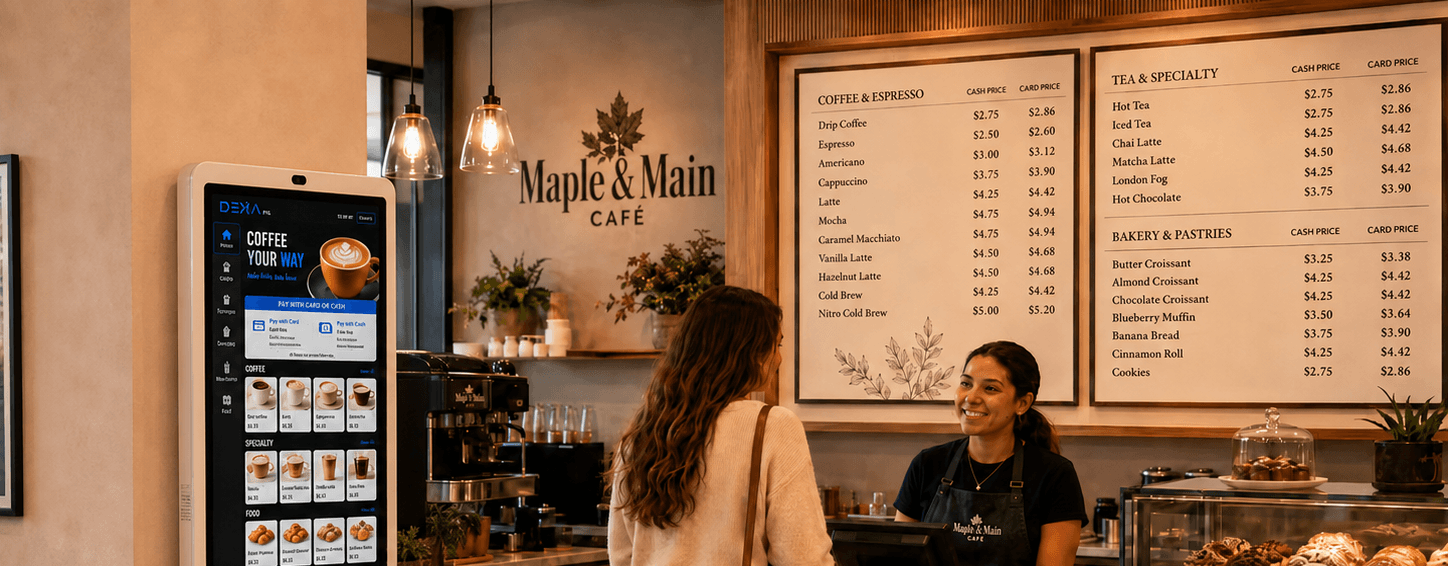
A cash discount flips the script. Your posted price is the card price. Customers who pay cash get a discount off that price.
So instead of "$10 plus a fee for cards," it's "$10.40, or $10.00 if you pay cash." Same math for you. Totally different feeling for the customer. Nobody's being punished. Cash payers are being rewarded.
Cash discounts are allowed in places where surcharges aren't. Connecticut, for example, bans surcharges but allows a cash discount off the listed card price, as long as you post the discount before the sale.
What is dual pricing?
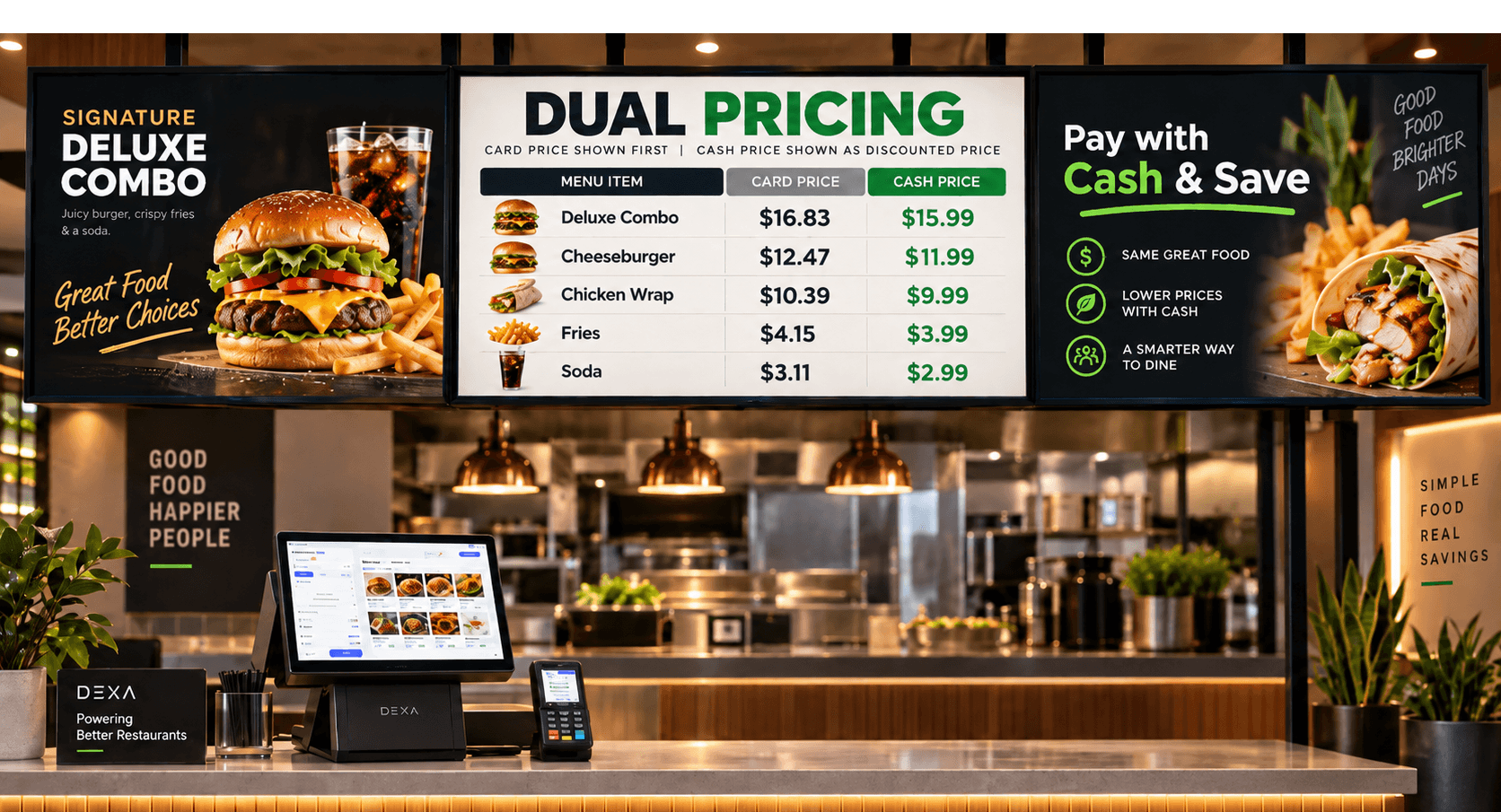
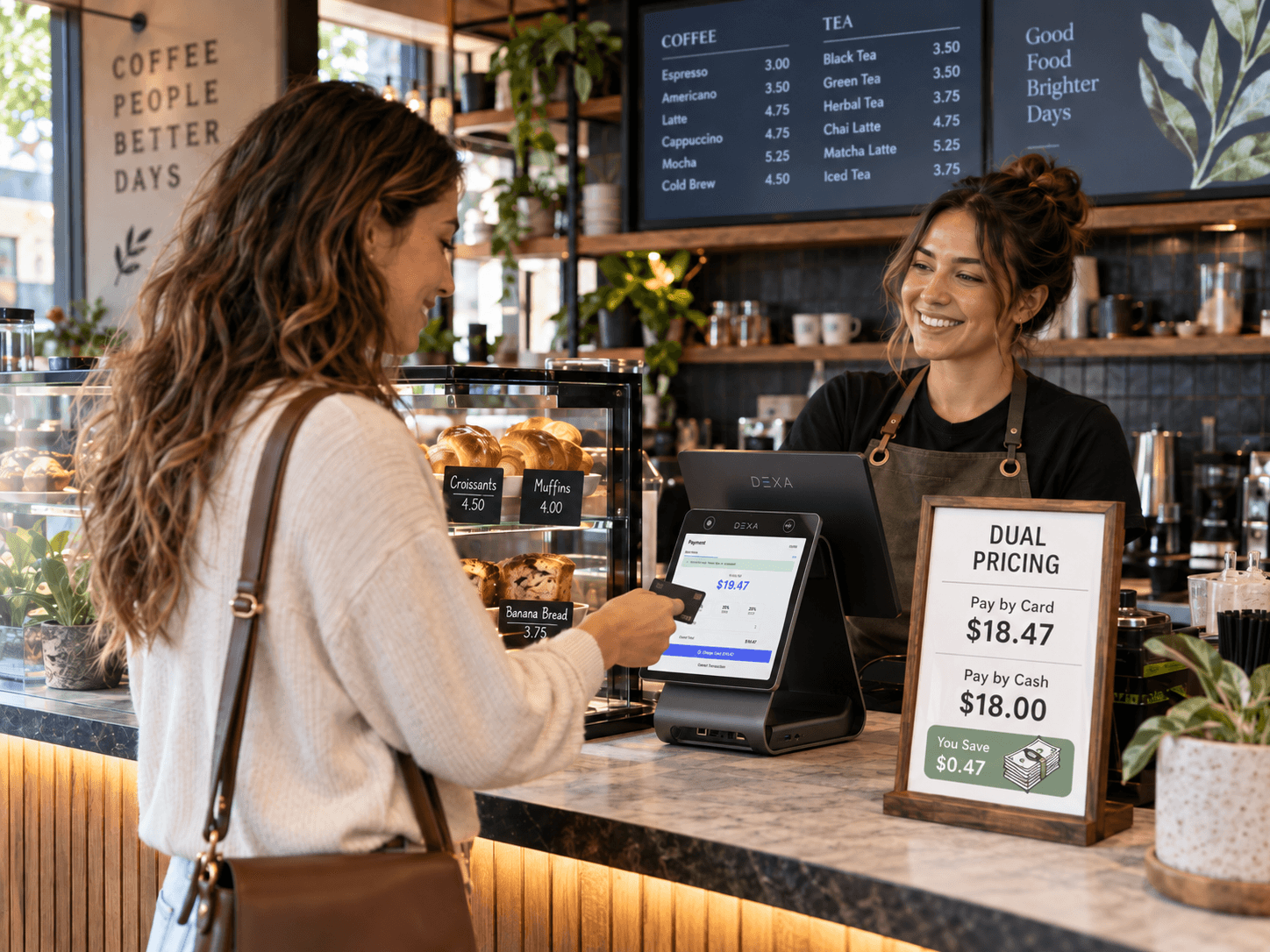
Dual pricing is the most transparent version of the same idea. You show both prices right on the menu, shelf tag or price board: the cash price and the card price. The customer sees both before they order and decides how to pay.
No surprise at the register. No line item that looks like a fee. New York's Department of State lists showing both prices as a compliant way to price, which is a big reason it's become the go-to for restaurants and shops in the city.
Dual pricing vs. surcharging: the side-by-side
When the customer finds out: Dual pricing, before they order. Surcharging, often at the register.
Debit cards: Dual pricing treats every card the same. Surcharging debit is never allowed.
Card-network registration: Surcharging requires 30 days' notice. Dual pricing done right doesn't.
States with surcharge bans: Surcharging is out. Dual pricing or a cash discount is how owners in those states stop eating fees.
How it feels: A surcharge feels like a penalty. Two prices upfront feels like a choice.
Is dual pricing the same as a cash discount?
They're close cousins. Both reward cash instead of penalizing cards, and both cover your processing costs. The difference is mostly display. A cash discount usually posts the card price and a sign about the cash discount. Dual pricing shows both numbers on every item.
Which one is right for you depends on your state and your setup. In Connecticut, we use the cash discount format. In New York and New Jersey, most of our merchants show both prices.
What about the "non-cash adjustment" on my receipt?
You'll see this on a lot of receipts. It's usually how a cash discount program shows the difference between the card price and the cash price. Done right, it's fine. Done wrong, where the menu shows the cash price and the card total is a surprise, it starts looking like a surcharge in disguise. That's the setup regulators go after.
So which one should you pick?
Here's how we think about it:
Want the least legal headache? Dual pricing or a cash discount. Prices are posted upfront, and they work on debit and credit alike.
In Connecticut? Cash discount off the listed card price, with the discount posted at the door and register.
Thinking about surcharging? Make sure you're in a state that allows it, register with the networks first, and never touch debit.
Whatever you pick, the result is the same goal: you stop handing 3% of every sale to the card companies.
Quick answers
What's the difference between dual pricing vs surcharging? Dual pricing shows a cash and card price upfront. Surcharging adds a fee at checkout for paying by credit card.
Is a cash discount the same as a surcharge? No. A surcharge adds a fee for cards. A cash discount takes money off for cash. Regulators treat them very differently.
Can I surcharge debit cards? No. Surcharging debit and prepaid cards is not allowed.
Do I need signs for dual pricing? Yes. Post it at the door, at the register, on menus and online, so nobody is surprised.
This post is general information, not legal advice. State rules change, and we check the current rules in your state before we set you up.
Find out what you're really paying
Not sure which program your processor actually put you on? Most owners aren't. We'll tell you exactly what you have, and if it's set up right.
Send us one recent statement. We'll show you your real rate, where the padding is, and exactly what you'd keep with dual pricing. No contract, no cancellation fee, and a real person on the phone.
Call 888-411-7583 or get your free savings quote.
MTech Distributors has helped 5,000+ businesses across all 50 states since 2017.